
6 Things You Must Know Before Purchasing Suitable Downlights for Your Lighting Project
6 Things You Must Know Before Purchasing Suitable Downlights for Your Lighting Project
(Must-read for Beginners)
Choosing the right downlights is crucial for the success of any lighting project—whether it’s a residential space, commercial venue, or public area. Downlights not only provide basic illumination but also affect the overall atmosphere, energy efficiency, and long-term usability of the space. To avoid costly mistakes and ensure your downlights meet your project’s needs, here are 6 essential things you must know before making a purchase.
1. Clarify the Lighting Purpose and Space Requirements
The first step is to define the core purpose of the lighting and the characteristics of the space where the downlights will be installed. Different spaces and uses require different downlight specifications: for example, a living room needs soft, ambient lighting to create a comfortable atmosphere, so downlights with low brightness and warm color temperature are suitable; a kitchen or office requires bright, uniform lighting for clear visibility, so high-lumen downlights are more appropriate. Additionally, consider the ceiling height—lower ceilings (2.5-2.8m) are suitable for shallow-recessed or surface-mounted downlights to avoid a sense of oppression, while higher ceilings (3m+) can use deep-recessed downlights to focus light and enhance layering. Ignoring space characteristics will lead to mismatched lighting effects, such as insufficient brightness or harsh light.
2. Understand Color Temperature and Color Rendering Index (CRI)
Color temperature and CRI are two key indicators that directly affect the lighting effect and user experience. Color temperature (measured in Kelvin, K) determines the "warmth" or "coolness" of the light: warm white (2700K-3500K) is suitable for bedrooms, living rooms, and other spaces that require a cozy feeling; neutral white (4000K-5000K) is ideal for offices, kitchens, and commercial spaces where clarity is needed; cool white (6000K+) is suitable for public areas such as corridors and garages, but it may feel cold in residential spaces. The Color Rendering Index (CRI, ranging from 0-100) measures how accurately the light reproduces the true color of objects—for spaces that require color accuracy (e.g., retail stores, art galleries, makeup areas), choose downlights with CRI ≥ 90; for general residential use, CRI ≥ 80 is sufficient. Choosing the wrong color temperature or low CRI will make the space feel uncomfortable and affect the display of objects.
3. Choose the Right Beam Angle
The beam angle of downlights determines the range of light irradiation and the concentration of light, which is closely related to the lighting layout. Common beam angles include narrow beam (15°-25°), medium beam (30°-45°), and wide beam (60°+). Narrow beam downlights are suitable for accent lighting, such as highlighting artwork, decorations, or specific display areas; medium beam downlights are the most versatile, suitable for general ambient lighting in most spaces (e.g., living rooms, bedrooms); wide beam downlights are ideal for large spaces (e.g., conference rooms, shopping malls) to ensure uniform illumination without dark areas. It’s important to match the beam angle with the space size and lighting purpose—for example, using a narrow beam in a small room will cause uneven lighting, while a wide beam in a small space may lead to light waste.
4. Pay Attention to Energy Efficiency and Lifespan
Downlights are long-term used lighting fixtures, so energy efficiency and lifespan are important factors to consider for cost-saving and maintenance. Currently, LED downlights are the mainstream choice due to their high energy efficiency, long lifespan, and low heat generation—compared with traditional incandescent or fluorescent downlights, LED downlights can save 70%-80% of energy and have a lifespan of 50,000 hours or more (equivalent to 10+ years of normal use). When purchasing, check the energy efficiency rating (preferably Grade 1, it depends on 3 parts together: Driver efficiency + LED luminous efficiency (lm/W) + heat dissipation design.) and the manufacturer’s warranty period—reliable brands usually provide a 3-5 year warranty, which can avoid troubles caused by premature damage. Avoid choosing cheap, low-quality LED downlights, as they may have poor energy efficiency, short lifespan, and even safety hazards such as overheating.
5. Consider Installation and Compatibility
Before purchasing, you need to confirm the installation method and compatibility of the downlights with your project’s ceiling structure. There are three common installation types: recessed (embedded in the ceiling, suitable for suspended ceilings), surface-mounted (installed directly on the ceiling surface, suitable for ceilings that cannot be recessed), and semi-recessed (partially embedded, combining the advantages of recessed and surface-mounted). Additionally, check the cut-out size of the downlights—recessed downlights require a specific hole size, so you need to measure the ceiling hole in advance to avoid mismatches. For smart lighting projects, choose downlights that are compatible with your smart system (e.g., Bluetooth, WiFi, ZigBee) to ensure seamless connection and control. Ignoring installation and compatibility will lead to installation difficulties or inability to use normally.
6. Choose a Reputable Brand and Quality Assurance
The quality of downlights directly affects their performance, safety, and lifespan, so it’s essential to choose a reliable brand. Reliable brands have strict quality control standards, use high-quality materials (e.g., aluminum casings for heat dissipation, high-quality and branded LED chips+drivers), and comply with national safety standards (e.g., CE, RoHS, CCC, S certifications). Avoid purchasing unbranded or counterfeit downlights, as they may have problems such as unstable light output, poor heat dissipation, and even fire hazards. When purchasing, you can check customer reviews, brand reputation, and after-sales service—good after-sales service can provide timely support if there are problems with the downlights during use.
In summary, purchasing suitable downlights requires comprehensive consideration of lighting purpose, color temperature, beam angle, energy efficiency, installation compatibility, and brand quality. By mastering these 6 key points, you can avoid common mistakes and choose downlights that meet your project’s needs, creating a safe, comfortable, and efficient lighting environment.
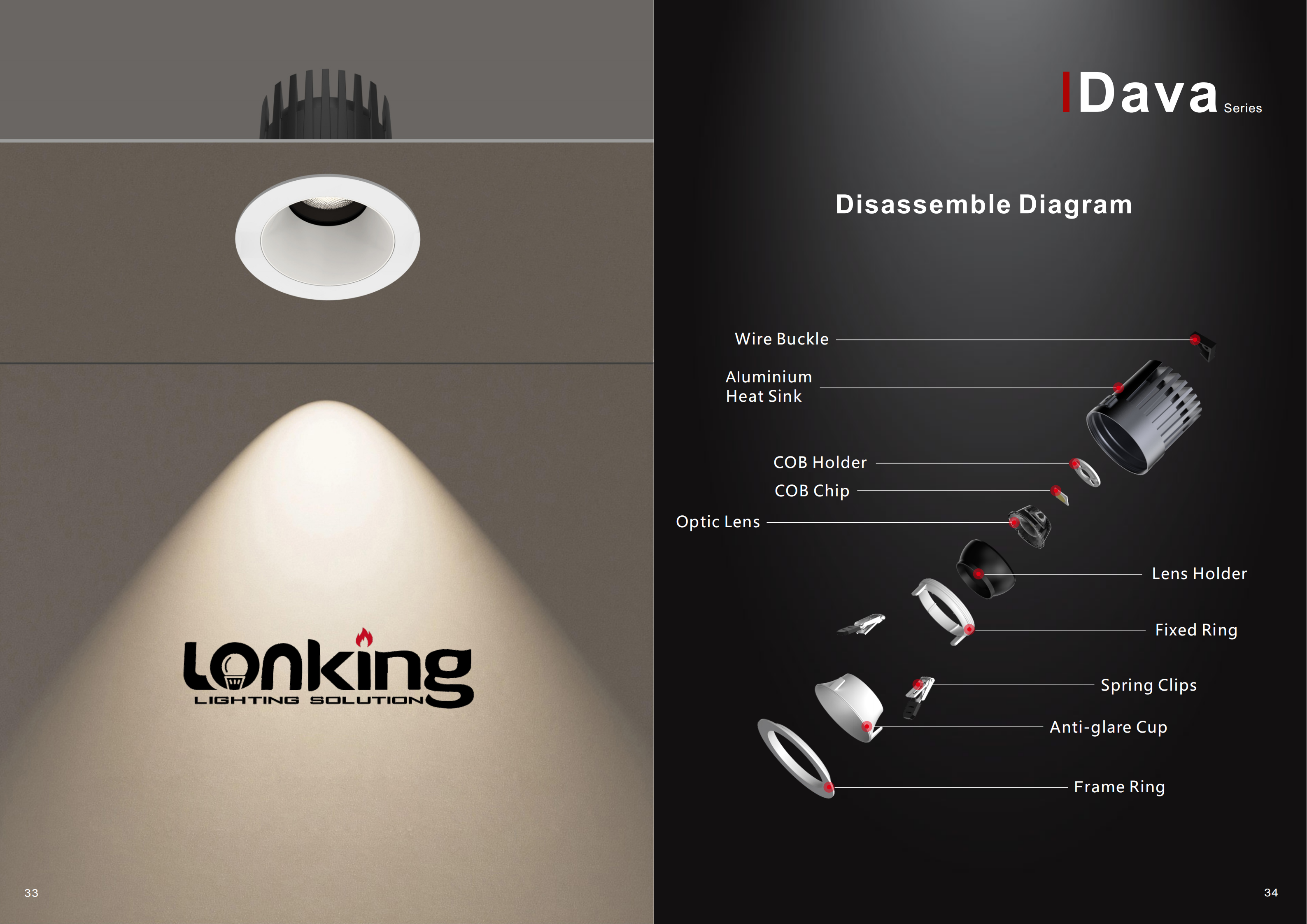
Still deciding which downlights fit your project? Tell LonKing Lighting about your space, ceiling height and lighting goals, and we will help you choose the right fixtures. Contact us for specifications and project pricing.